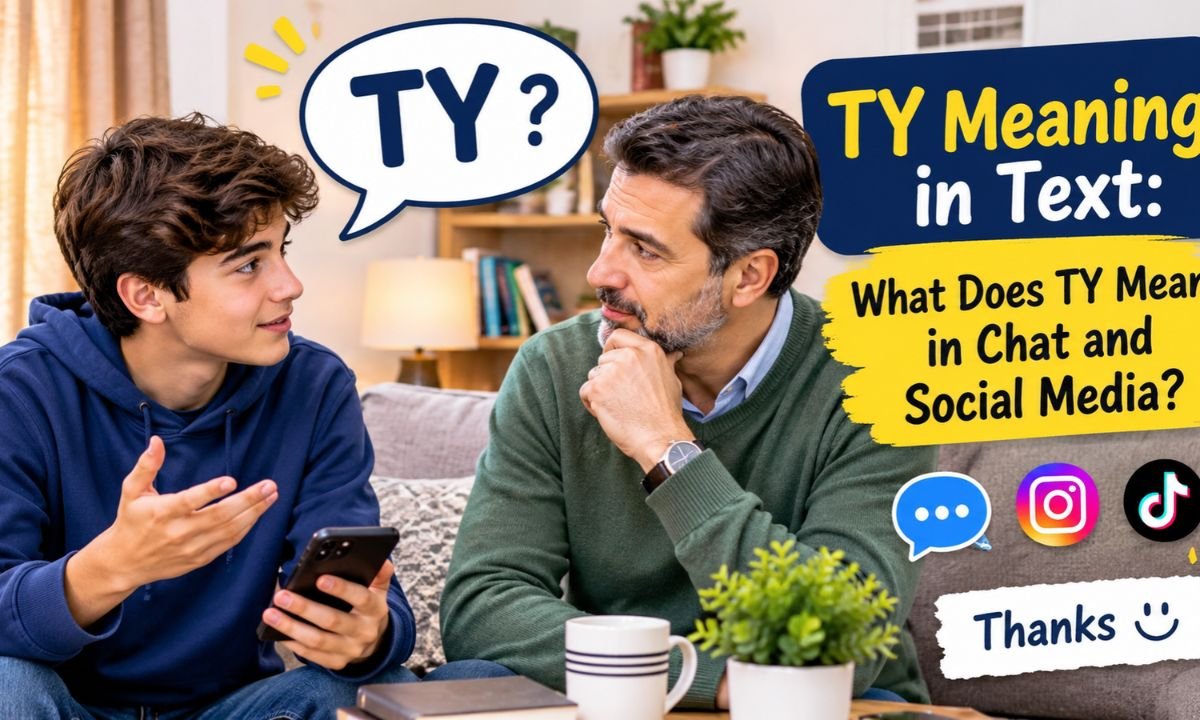

TY means “thank you.” It is one of the oldest and simplest texting abbreviations, and you will see it in DMs, comment sections, game lobbies, and group chats. Dictionary.com lists it as an acronym for thank you, and Wiktionary classes it as internet slang used in text messaging.
The meaning rarely changes from platform to platform, but tone and context do. This guide explains what TY stands for, how people use it, when it can feel too casual, and how to reply when someone sends it to you.
What Does TY Mean in Text?
In a text message, TY is a quick way to say thank you. People send it after receiving a favor, a compliment, an answer, or a reply that helped them.
You may see it as “TY,” “ty,” or “Ty,” and the meaning stays the same. Stretched versions like “tyty” or “tyyy” are just friendlier, more enthusiastic variations.
Ty meaning in text from girl
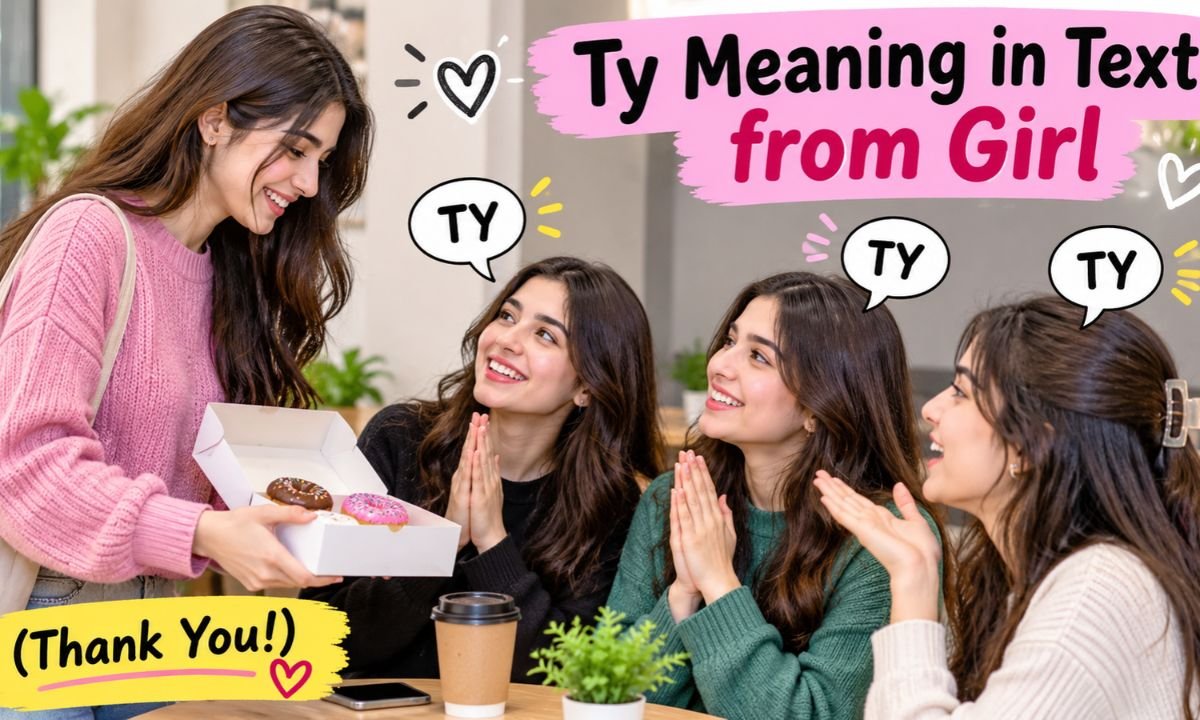
When a girl sends TY, it means exactly what it means from anyone else: thank you. Gender does not change the definition, so the useful clues are the tone, the punctuation, and the conversation around it.
A warm “ty!!” or “tyty 😊” usually signals real appreciation. A flat “ty.” with no emoji after a long message can read as brief or closing, but it is more often just a person being quick.
TY Full Form and Definition
The full form of TY is “thank you.” It is an initialism, meaning each letter stands for a word, and it works as an interjection that closes out a request or acknowledges kindness.
It is informal by nature. That makes it perfect for fast chats and a little too relaxed for formal writing.
What Does TY Stand For in Slang?
In slang, TY stands for “thank you” almost every time. It sits in the same family as “thx,” “ta,” “tysm,” and “tyvm,” which are all quick ways to show gratitude.
Unlike many slang terms, it has no hidden or edgy double meaning in everyday chat. It is a plain, polite abbreviation.
Is TY Rude, Offensive, or Neutral?
TY is neutral to polite. It is not rude or offensive, and parents and safety resources generally classify it as harmless teen slang.
The only risk is tone. Some people, such as older relatives or new work contacts, may find a bare “ty” a little offhand, even when you mean it kindly.
Where Is TY Commonly Used?
TY shows up wherever messages are short and fast. That includes text messages, WhatsApp, Snapchat, Instagram, TikTok, X, Facebook Messenger, Discord, and live stream chats.
| Platform | Typical Use |
| Text messages and WhatsApp | Thanking a friend for a favor or reply |
| TikTok and Instagram | Replying to compliments in comments |
| Snapchat | Quick acknowledgment of a snap or message |
| Gaming chats | Thanking a teammate mid-match |
Why People Use TY
Speed is the main reason. Two letters take less time to type than two words, especially in fast chats where messages scroll past quickly.
It also feels friendly without being heavy. TY acknowledges someone without turning a small favor into a formal moment.
Similar Meanings and Related Slang Terms
Several abbreviations express thanks in different strengths. Some are warmer, some are more casual, and one looks ahead instead of back.
Choosing the right one helps your message match the moment, especially when you want to sound more appreciative than a plain TY.
Comparison Table of Similar Slang
| Abbreviation | Meaning | Feels Like |
| TY | Thank you | Casual and quick |
| TYSM | Thank you so much | Warmer |
| TYVM | Thank you very much | Warm, slightly more polite |
| THX | Thanks | Very casual |
| TIA | Thanks in advance | Used when asking for help |
| YW | You’re welcome | The standard reply |
Ty meaning in English
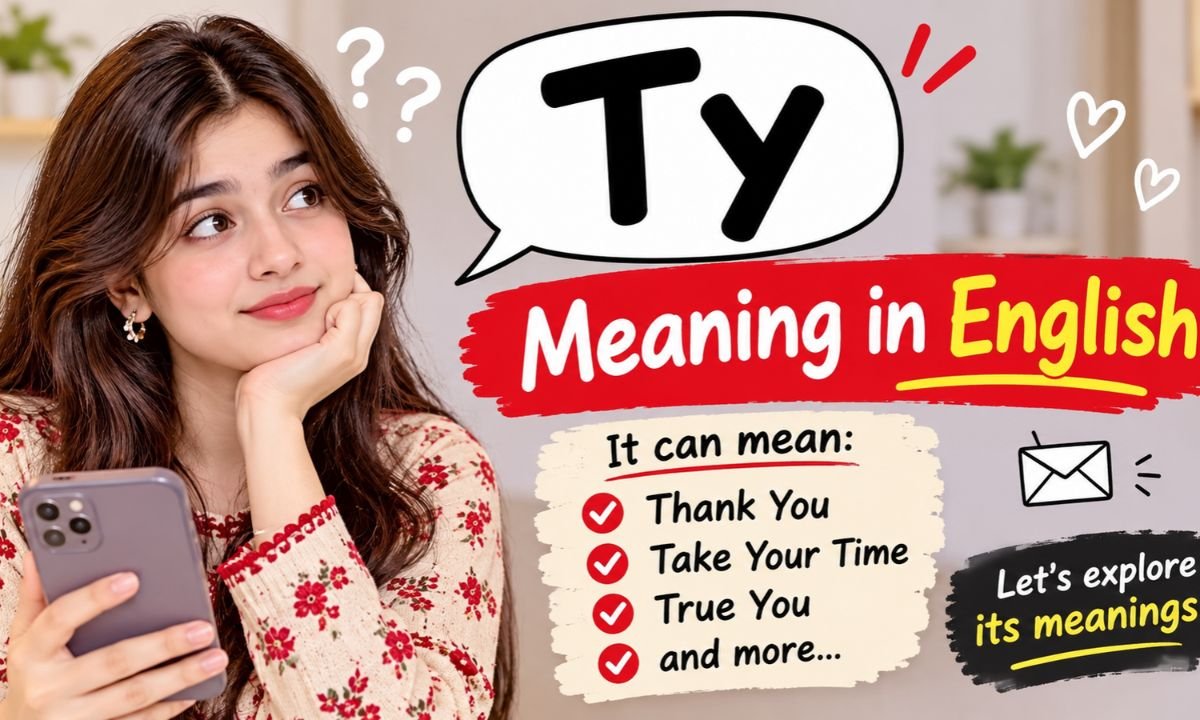
In English, TY is defined as a text-messaging and internet abbreviation for “thank you.” Dictionary.com also lists “-ty” as a separate suffix, as in twenty or unity, which has nothing to do with the slang.
Written as “Ty” with a capital T and used with a person’s name, it can also be a nickname, such as a short form of Tyler. Context makes the difference obvious.
Related Slang With Similar Meaning
- Thx: a shortened “thanks,” very casual
- Ta: a British-style informal thanks
- Tyty: a repeated, friendlier TY
- Appreciate you: a warmer, more personal option
- Cheers: a casual thanks common in British English
All of these carry the same core idea of gratitude, with small differences in warmth and region.
Real-Life Examples of TY Usage
- Friend: “I saved you a seat.” You: “ty!”
- Comment: “Love this outfit.” Reply: “tyty 💕”
- Coworker: “Sent the file over.” You: “TY, got it.”
- Game chat: “Healing you now.” Teammate: “ty”
In each case, the meaning is simple gratitude, and the surrounding words decide how warm it sounds.
Origin and Background of TY
TY grew out of early texting and online chat culture, where people shortened common phrases to type faster. No single inventor or exact date is reliably documented, so it is best understood as a natural product of that shorthand habit.
Its staying power comes from how useful it is. Thanking someone is a constant need, and TY does it in two characters.
Is TY Safe for Social Media?
Yes. TY is safe, friendly, and appropriate on every major platform. It does not carry hidden meanings that parents or moderators typically need to worry about.
As with any short message, read the context. If a stranger uses TY in an odd or pressuring conversation, the concern is the conversation, not the abbreviation.
Common Misunderstandings & Misinterpretations
The most common mix-up is reading a short “ty” as cold or sarcastic. Most of the time it is simply a quick thank you from someone busy.
Another confusion involves “Ty” as a name, or “ty” appearing at the end of words like “twenty.” Capitalization and placement usually make the difference clear.
Ty meaning in text funny
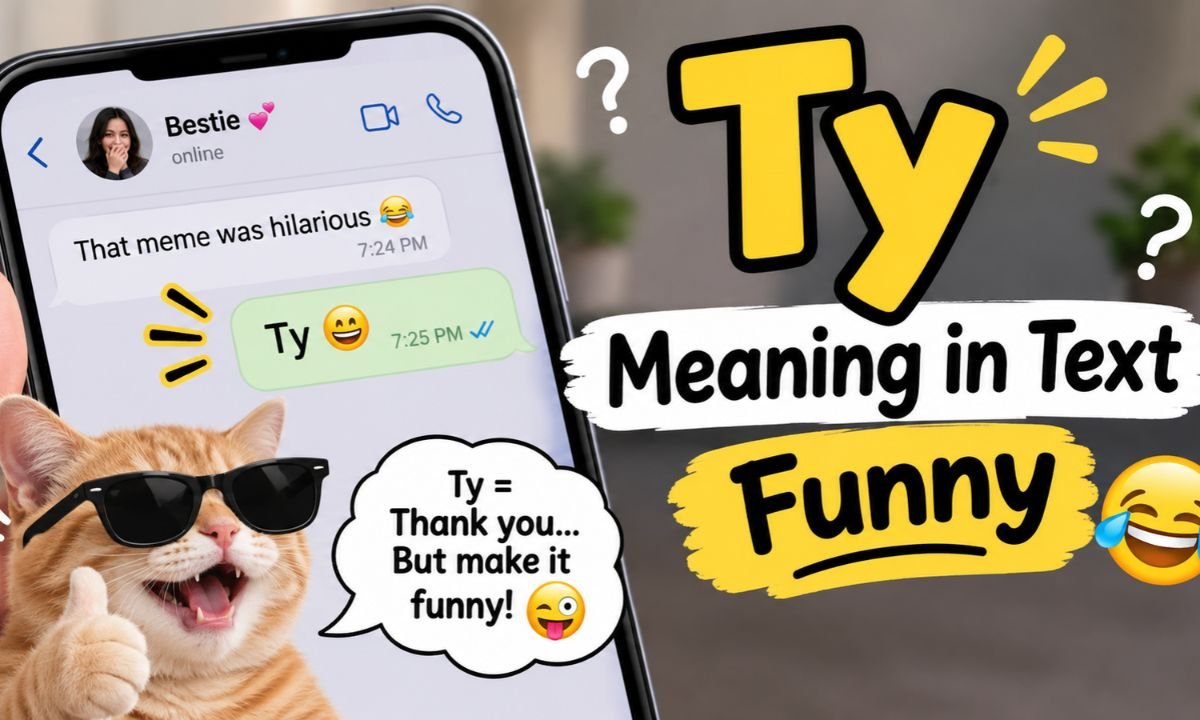
TY can be playful. People stretch it into “tyyyy,” double it into “ty ty,” or pair it with emojis for a joking, exaggerated thank you.
It can also be used with a sarcastic edge, such as “ty for nothing.” In that case the punctuation and the surrounding message carry the real tone.
when to Avoid Using TY
Avoid TY in formal emails, job applications, client messages, and first contacts with someone senior. A full “thank you” looks more respectful in those settings.
It is also worth skipping when someone has done something significant for you. A heartfelt message means more than two letters.
Also Read This:What Does PM Mean in Text? Understanding “PM Me”
Polite Alternatives to TY
- “Thank you so much”
- “Thanks, I really appreciate it”
- “Thank you for your help”
- “Much appreciated”
- “I’m grateful for your time”
These options sound more considered and fit professional or sincere moments better.
Impact of Using Slang in Communication
Slang like TY speeds up conversation and signals that you are comfortable with the person you are talking to. It can also create a sense of shared language among friends.
The effect depends on the audience. What feels relaxed to one person may feel careless to another.
Positive Effects
TY keeps gratitude easy. Because it takes almost no effort, people are more likely to acknowledge small kindnesses that might otherwise go unthanked.
It also keeps chats light and moving, which works well in group conversations and fast-paced platforms.
Possible Downsides
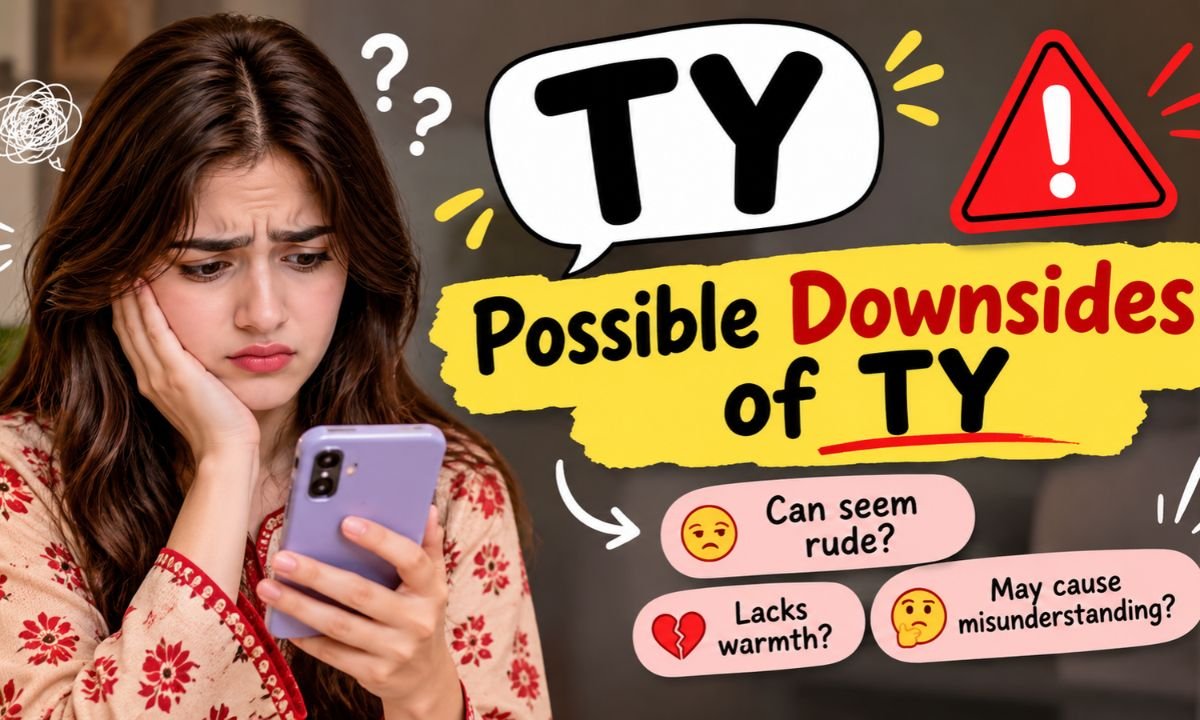
A bare TY can come across as dismissive when the other person expected more warmth. This is most likely in emotional conversations or formal exchanges.
Heavy reliance on abbreviations can also confuse people who are less familiar with texting shorthand.
Multiple Meanings of TY Depending on Context
| Context | Meaning of TY |
| Texting and social media | Thank you |
| Names | A nickname such as Ty, short for Tyler |
| Finance and taxes | Tax year, in some workplace usage |
| Word endings | The suffix -ty, as in twenty |
In casual chat, assume “thank you” unless the setting clearly points elsewhere.
Regional & Cultural Usage
TY is understood across English-speaking online communities. In British and Commonwealth English, people often prefer “ta” or “cheers,” but TY is still widely recognized.
Many other languages have their own texting shorthand for thanks, so TY is mainly an English-language convention.
Generational Differences
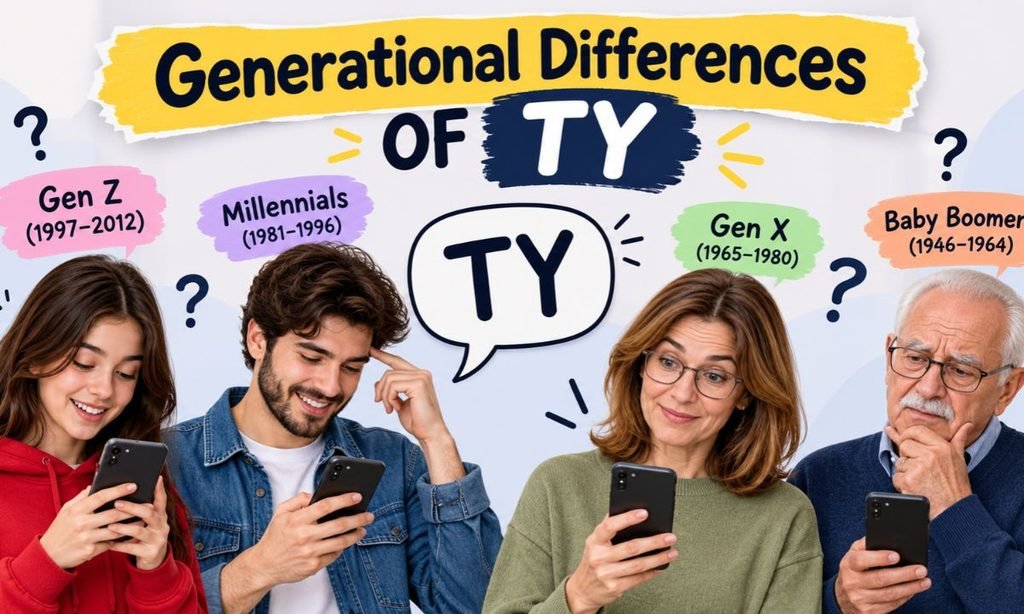
Younger users send TY freely and often pair it with emojis or repeated letters. Older users are more likely to write “thanks” in full and may read a lone “ty” as brisk.
That gap is about style, not meaning. Both groups understand the abbreviation.
Why TY Is So Popular
TY is popular because it is short, clear, polite, and universally understood in online chat. It fits every platform and every casual relationship.
Few abbreviations combine speed and good manners so effectively, which is why TY has stayed in use for so long.
FAQs About TY Meaning
What does TY mean in text?
TY means “thank you” and is used to show quick gratitude in messages and chats.
What is the difference between TY and TYSM?
TY is a simple thank you, while TYSM means “thank you so much” and sounds warmer.
How do you reply to TY?
Reply with “YW,” “you’re welcome,” or “no problem,” depending on how casual the chat is.
Is it rude to say TY instead of thank you?
It is not rude among friends, but a full “thank you” is better in formal or professional messages.
Can TY mean something other than thank you?
Yes, but rarely. It can be a nickname like Ty or, in some workplaces, shorthand for tax year.
Conclusion
TY means “thank you,” and it is a safe, friendly abbreviation for almost any casual conversation. Reading its tone comes down to context, punctuation, and who is sending it.
Use TY with friends and in quick chats, and switch to a full thank you when the moment calls for more care.